Retirement
Plan Your retirement with confidence
It’s never too early to start planning for retirement. We suggest that you think about the standard of living you might want in retirement, to make sure that your pension and other income will be enough to provide you with the things you need and want.

Tell Us Who You Are
- Active Members

Retiring from Employment
Learn when you can retire, how pension is calculated, and more.

Retiring with benefits on hold
Access calculator, retirement checklist, and key forms.

Already retired
Useful links to help you understand more about pensions.
Or start your retirement journey here...
-1.jpg?width=445&height=299&name=Frame%201321314520%20(1)-1.jpg)
Check Eligibility, Plan & Notify Employer
GMPF Processes Your Retirement Application
Complete Retirement Paperwork & Final checks
Plan & Process
It’s never too early to start planning for retirement. We suggest that you think about the standard of living you might want in retirement, to make sure that your pension or other income will be enough to provide you with the things you need and want. If you are thinking about retiring, our video and the information below tell you more about the process.
It's good to think ahead, as you will have some decisions to make. You will need to decide on the date you want to retire and what benefits you want to take.
If you have at least two years’ membership in the Local Government Pension Scheme (LGPS), you can normally take your pension from age 55 (rising to 57 from 6 April 2028), although taking it before your normal pension age may reduce your benefits. Your normal pension age is usually linked to your State Pension age for benefits built up after 1 April 2014, or age 65 for earlier benefits. You may also be able to retire later, take flexible retirement with your employer’s approval, or retire early due to redundancy or ill health. You can usually exchange part of your pension for a tax-free lump sum, and the retirement process begins by notifying your employer, who will provide the necessary information to GMPF.
If you leave or opt out of the Local Government Pension Scheme (LGPS) with at least two years’ membership, your pension benefits are usually held as deferred (“benefits on hold”) and increased each year in line with inflation. You can normally access these benefits from age 55 (rising to 57 from 6 April 2028), although taking them before your normal pension age may reduce the amount paid. Your normal pension age is usually linked to your State Pension age for benefits built up after 1 April 2014, or age 65 for earlier benefits. You can usually choose to take part of your pension as a tax-free lump sum, and benefits can also be accessed early in some cases due to ill health. Requests can be made through your My Pension account or by contacting GMPF directly.
Pensions UK has created some retirement living standards to help. These show you what life in retirement might look like at three different levels, and what a range of common goods and services would cost for each level.
Roughly speaking, a single person will need about:
- £13,400 a year to achieve the minimum living standard
- £31,700 a year for moderated
- £43,900 a year for comfortable
For couples, it's:
- £21,600 a year to achieve the minimum living standard
- £43,900 a year for moderate
- £60,600 a year for comfortable
Visit our 'Learn more about pensions' webpage for more information about living standards.
Choosing the right time to retire is entirely a personal choice and will normally depend on the pension income you have built and the lifestyle you want to achieve. Your Greater Manchester Pension Fund (GMPF) benefits will form some of your pension income. You can use the calculator on your My Pension account to find out an estimate of what you might receive. Elected members do not have access to the calculator in My Pension, as different rules may apply. Instead, please speak to either your employer, or if your benefits are on hold, contact our Customer Services team.
It’s also worth finding out the value of your State Pension and the income this is likely to provide. You can do this on the gov.uk website.
For many people, deciding when to retire and what to do next can be a daunting prospect and so it is worthwhile spending some time thinking about this and talking it over with your employer, family and friends.
GMPF holds pre-retirement events to help. Please speak to your employer in the first instance as they may have sessions planned, or visit our Events section to check if we are visiting a region close to you or holding an online event.
When the time comes, it’s best to give everyone as much notice as possible, especially if you want to start receiving your pension from the date you retire.
1. How do I notify GMPF of my retirement?
You don’t need to. If you are intending to retire and want to claim your pension, simply notify your employer. Please check directly with your employer to find out how much notice they require. They will then send us the notification and information we need.
2. What information does my employer provide?
Your employer will provide us with your pay figures up to your last day of work, as we don’t have direct access to your pay information. Unfortunately, we are unable to get this information directly from you.
3. What happens when GMPF receives the pay information?
We check the information for accuracy. If we find any inconsistencies, we query them with your employer and in some cases request further information. This can cause a slight delay while we resolve the query.
Once we are happy with the information we will create tasks for you to complete through your online My Pension account. We will email you to you to inform you when the tasks are available. If you have elected for paper communications we will send you a paper copy of your retirement documents.
4. What do I need to do when I receive my retirement tasks or documents?
Your retirement tasks or documents will contain full details of how your pension has been calculated with two quotes:
One quote will show the maximum pension you could receive. The other shows the maximum lump sum you can take. If you have any Additional voluntary contributions (AVCs) or Additional pension contributions (APCs) they will be included in the figures unless otherwise stated.
We aim to process the information and produce your retirement information within 15 working days of receiving the information we need from your employer. If there are any expected delays, if we have your email address, we'll email you to let you know.
Once you receive your retirement information you will need to complete the member’s retirement form (P71m) by completing your tasks. We will need to see evidence of your date of birth. This can be a valid passport, valid photo card driving licence or birth certificate.
If you have elected for paper communications we will send you a paper copy of your retirement documents.
5. What happens when GMPF receive my completed tasks or forms?
We check that we have all the information we need. If any of the information is missing or unclear, we will set up additional tasks to complete. Any incomplete paper forms will be returned to you.
We use the pension information you have provided to check against the lump sum allowance to ensure you haven’t gone over the limit. We also check your pension against the annual allowance.
If we have your email address, we'll email you throughout the process to keep you up to date.
Finally your pension is put into payment according to the election you have made.
We aim to pay any lump sum as soon as possible following your retirement date. However, if you have an AVC that you have been contributing to up to your last working day, it may delay payment of your pension as we have to wait for all the payments to be passed from your employer to our AVC provider, and for them to disinvest your money.
6. Things to consider
- Your pension payment will be the last working day each month. It is treated as income and is therefore taxable.
- We cannot pay any part of your pension before your retirement date even if we have all the information we need.
- If you exceed your lump sum allowance and/or annual allowance there may be tax implications that need to be dealt with before we can put your pension into payment.
- We return any original documents using the same method we received them, for example if we receive it via recorded delivery we will return it the same way.
- We do not return photocopied documents unless specifically requested.
7. Additional voluntary contributions (AVCs)

There are lots of financial planning tools available to help you. There are also a number of people and organisations that will help you think about lifestyle and social opportunities.
- GOV.UK - check your state pension - The Government website where you can get a forecast for your State Pension.
- MoneyHelper - Pension calculator - This calculator helps those approaching retirement by looking at required income, expected income and any shortfall.
- Unbiased.co.uk - If you’re looking for some advice on retirement planning then this website gives a list of registered financial advisers.
Pension Calculator
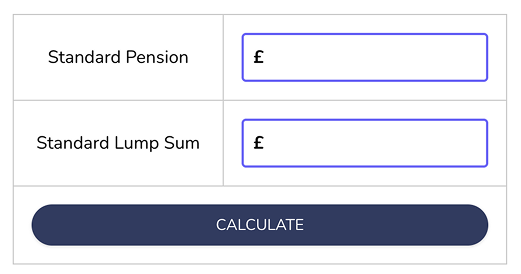
Use the value of your standard benefits to calculate the amounts in your maximum lump sum package. When you decide to take payment of your pension benefits you will have the option to exchange some of your annual pension for a tax free lump sum. If you know the value of your standard pension benefits, you can use this modeller to give you an idea of your maximum lump sum, under HMRC rules.

Tools & Resources
We've put together some useful links to help you understand more about pensions, how they work, and how to plan for your retirement.
- Video
Watch videoHow pensions and the LGPS works
Watch this video to understand how pensions and the Local Government Pension Scheme (LGPS) works. - VideoWatch video
Retirement - accessing your benefits on hold
Do you have benefits on hold with GMPF? Watch this video to learn about the retirement process. - FormLearn More
50/50 Application Form
- Video
Watch videoIntroducing your pension (video)
A short introductory video explaining how the LGPS works and the key terms every member should recognise.
State Pension
In addition to your Greater Manchester Pension Fund (GMPF) pension you may also qualify for a State Pension.
The State Pension is paid through the Department of Work and Pensions (DWP). If you are eligible for a State Pension, as well as your pension with GMPF, these pensions will be paid separately.

Still Need Help?
Our member services team is here to help with any questions about your pension.